Menopause Hot Flashes: Why They Happen and What Actually Helps
It comes on fast — a sudden wave of heat spreading through your chest, neck, and face, sometimes with your heart racing…

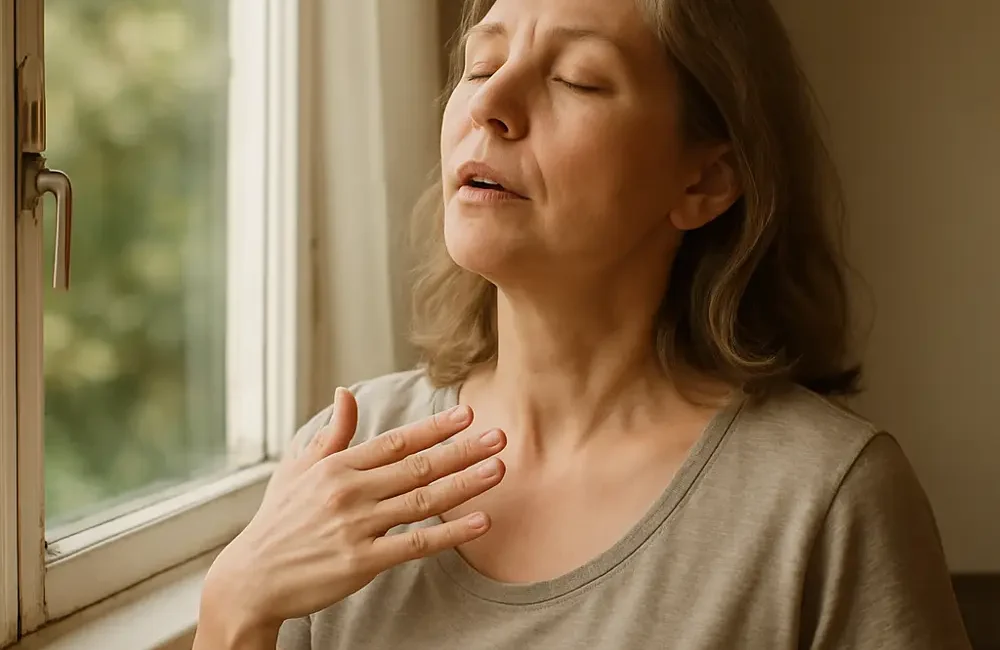
It comes on fast — a sudden wave of heat spreading through your chest, neck, and face, sometimes with your heart racing and sweat breaking out, even though nothing around you has changed. Maybe it happens at your desk. Maybe it wakes you up at 3am, sheets damp, wide awake. If you’re in your 40s or 50s and this feels newly familiar, you’re experiencing one of the most defining, and most commonly misunderstood, symptoms of the menopause transition.
What’s actually happening in your body
Hot flashes are directly tied to the hormonal shifts of perimenopause and menopause — specifically, declining and fluctuating estrogen levels disrupt the part of your brain responsible for regulating body temperature. Your body essentially misreads its own temperature as too high and triggers a rapid cooling response — blood vessels near the skin’s surface dilate (causing that flushed, warm feeling), and sweat glands activate to cool you down, even though your actual core temperature hadn’t meaningfully risen in the first place.
Mayo Clinic describes hot flashes as a sudden feeling of warmth spreading through the chest, neck, and face, often accompanied by flushed or blotchy skin, a faster heartbeat, and sweating — followed by a chilled feeling as the flash passes. Some people also notice a wave of anxiety accompanying the physical sensations, which makes sense given how abrupt and physically intense the experience can be.

How long this actually lasts — the honest answer
This is the part that surprises a lot of women: a single hot flash typically lasts just one to five minutes, but the pattern of having them recurs, on average, for more than seven years total. Some women experience them for over a decade. This is genuinely useful to know upfront, because a lot of people expect hot flashes to be a brief, one-or-two-year phase — and when they persist longer, it can feel like something’s wrong, when actually a multi-year timeline is well within normal range.
Frequency and intensity vary enormously between individuals. Most people who experience hot flashes have them daily, but severity ranges from mild and barely noticeable to intense enough to disrupt sleep, work, and daily life.
What triggers or worsens hot flashes
Certain foods and habits can make hot flashes more frequent or intense, even though they’re not the root cause. Spicy foods, caffeine, and alcohol are commonly reported triggers. A warm room or excess clothing layers can also bring one on, since your body’s temperature-regulation system is already running with a narrower margin of error during this transition. Stress is another recognized trigger for many women, adding another layer to why this symptom can feel especially unpredictable during an already demanding life stage.
What genuinely helps — from simple to medical
For milder hot flashes, lifestyle adjustments are a reasonable starting point: dressing in layers you can remove as needed, keeping your environment cooler with a fan or air conditioning, sipping a cold drink at the first sign of a flash, and identifying and reducing your personal trigger foods and drinks. It’s worth knowing that some commonly recommended lifestyle remedies — certain herbal supplements in particular — don’t have strong research support behind them, according to major menopause organizations, even though they’re generally not harmful to try.

For hot flashes that are frequent or disruptive enough to affect sleep and daily functioning, medical treatment is genuinely worth discussing with a healthcare provider, and there are more options today than many people realize:
Hormone therapy (estrogen) is the most effective treatment available for hot flashes, according to Mayo Clinic. It’s not right for everyone, though — people with a history of breast or endometrial cancer, heart disease, stroke, or blood clots need a careful conversation with their doctor about individual risk before considering it.
Non-hormonal medical options have expanded meaningfully in recent years. Fezolinetant is a newer, non-hormonal daily pill that works by blocking a specific brain pathway involved in temperature regulation, rather than through estrogen at all — a genuinely different mechanism from older options. Low-dose paroxetine is the only non-hormonal medication specifically FDA-approved for hot flashes, and other antidepressants like venlafaxine have also shown effectiveness for some women, even in the absence of depression, simply because of how they affect the same temperature-regulation pathways.
For more resistant cases, a procedure called a stellate ganglion block — an injection of numbing medication into a nerve cluster in the neck, originally used for pain management — has shown promise, though Mayo Clinic notes more research is still needed to fully establish its role in hot flash treatment specifically.
When to actually talk to a doctor about this
If hot flashes are affecting your sleep, concentration, mood, or daily activities, that’s a legitimate, sufficient reason to bring it up — you don’t need to wait until it becomes unbearable. A healthcare provider can typically diagnose hot flashes based on your symptoms alone, sometimes supplemented by blood tests to confirm where you are in the menopause transition or to rule out other causes of similar symptoms, like thyroid issues.
Myths about hot flashes, cleared up
Myth: Hot flashes only last a year or two. As covered above, the real average is over seven years, with some women experiencing them for a decade or more. This is one of the most common and unhelpful misconceptions, since it can make a normal, longer experience feel like something has gone wrong.
Myth: If lifestyle changes don’t fix it, nothing will help. Lifestyle adjustments genuinely help some women, but they’re not the only option, and it’s not a personal failing if they’re not enough for you. Medical treatments — hormonal and non-hormonal — exist specifically because lifestyle changes alone don’t resolve moderate to severe hot flashes for a lot of women.
Myth: Hormone therapy is too dangerous for anyone to consider. Risk depends heavily on individual health history, age, and how soon after menopause treatment begins. For many healthy women without specific risk factors, hormone therapy remains the most effective option available, and current guidance is considerably more nuanced than the blanket caution that circulated widely in the early 2000s.
Myth: Only older women get hot flashes. Hot flashes commonly begin during perimenopause, which can start in a woman’s early-to-mid 40s, sometimes even late 30s, well before periods have actually stopped.
Tracking your hot flashes before a doctor visit
A brief symptom log genuinely helps a healthcare provider recommend the right treatment faster, and it’s a fairly simple thing to keep for even just a week or two before your appointment. Worth noting: roughly how many hot flashes per day, what time of day they tend to happen, how long each one lasts, and anything you notice that seems to trigger or worsen them — specific foods, stress, alcohol, or a particular time of month if your periods are still somewhat regular.
It also helps to note how much they’re actually affecting you — disrupted sleep, difficulty concentrating at work, avoiding social situations. This context helps your provider understand not just the frequency, but the actual impact on your life, which is often what determines whether lifestyle changes are enough or whether medical treatment makes sense to discuss.
nn
Common questions about hot flashes
Are hot flashes the same as night sweats?
Essentially yes — night sweats are simply hot flashes that happen while you’re asleep, often intense enough to wake you and leave sheets or sleepwear damp. They’re driven by the same underlying mechanism.
Can hot flashes start before periods actually stop?
Yes, and this is extremely common. Hot flashes frequently begin during perimenopause — the transitional years leading up to menopause, while periods are still happening but becoming irregular — rather than only after periods stop entirely.
Do hot flashes mean something is wrong with me?
No — they’re one of the most common, well-understood symptoms of a normal biological transition nearly all women experience to some degree. Their intensity and duration vary widely, but experiencing them isn’t a sign anything is medically wrong.
Is it normal for hot flashes to come and go, then return years later?
Some women experience a pattern like this, though it’s less common than a more continuous multi-year experience. If hot flashes return after a long absence, particularly well past the typical menopause transition, it’s worth mentioning to a doctor simply to rule out other causes.
Can men experience something similar to hot flashes?
Yes — men undergoing certain hormone treatments, particularly for prostate cancer, can experience hot flashes through a similar mechanism, sometimes called castration-induced hot flashes in medical literature.
Hot flashes and sleep: why the two are so closely linked
Night sweats deserve their own mention beyond just being “hot flashes while asleep,” because the sleep disruption they cause can compound into its own problem. Waking up multiple times a night, even briefly, fragments sleep in ways that affect next-day mood, concentration, and energy — which is part of why hot flashes and the fatigue or brain fog some women report during this transition are often connected, even though they can feel like separate issues.
If night sweats are a significant part of your experience, moisture-wicking sleepwear and bedding, keeping your bedroom cooler than you might otherwise, and having a cold glass of water within reach can reduce how disruptive each episode is, even if they don’t eliminate the hot flashes themselves. For more frequent or severe night sweats, the same medical treatment options discussed above apply — this isn’t a separate condition requiring separate treatment.
nn
The bottom line
Hot flashes are a genuine, well-documented biological response to the hormonal shifts of menopause, not something to just tough out silently for years if they’re disrupting your life. They typically last far longer than most people expect, but real treatment options exist across a meaningful range — from lifestyle adjustments to hormone therapy to newer non-hormonal medications — and a healthcare provider can help you find what actually fits your situation and risk profile.
This article is for general educational purposes and isn’t a substitute for professional medical advice. If hot flashes are affecting your sleep or daily life, please talk to a healthcare provider.
Related reading

Emily started writing about health and wellness after watching her own mother struggle to find straight answers about perimenopause — answers that weren't buried in medical jargon or written for someone with a nursing degree. That experience shaped how she writes today. Every article on GetHealthy.Online is researched carefully and checked against trusted sources like the CDC, NIH, and Mayo Clinic — then translated into the kind of conversation you'd actually want to have with a friend who's done the homework for you. Emily isn't a doctor, and she'll never pretend to be one. When something calls for professional medical advice, she'll tell you so, plainly. Her job is to help you understand what's happening in your body, ask better questions at your next appointment, and feel a little less alone in figuring it out. She lives for the moments when a reader says, "I finally understand what my doctor was trying to explain."
Related Reading
 Women's Health
Why Weight Loss Feels Harder After 35 for Women
Okay, so here’s the thing nobody really prepares you for. You do the exact same thing…
 Women's Health
Sluggish Thyroid Symptoms Women Often Miss
You’re sleeping enough, or at least trying to. You’re eating reasonably well. And yet you’re tired…
 Women's Health
Bloating That Won’t Quit: A Woman’s Guide to Gut Discomfort
Your jeans fit fine in the morning. By early afternoon, you look — and feel —…
 Women's Health
Why You Leak a Little When You Sneeze — And What Actually Helps
You sneeze. Maybe you laugh a little too hard, or jump during a workout class, or…